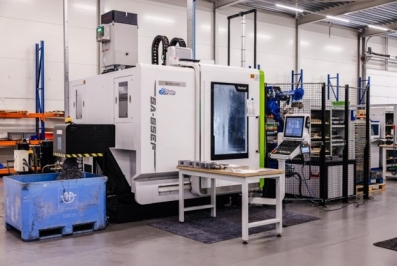
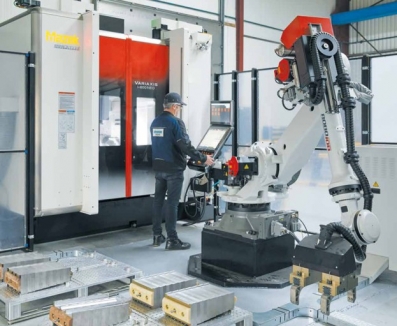
Introduction In today's high-precision manufacturing landscape, 5-axis machining is an indispensable technology for crafting complex geometries, particularly for aerospace structures, precision molds, and medical devices. By simultaneously driving the X, Y, and Z linear axes alongside two rotational axes, multi-surface machining can be completed in a single setup. However, as part designs grow increasingly sophisticated, the challenges associated with managing cutting tools have escalated significantly.
The Evolving Challenges in Multi-Axis Tool Management As manufacturers push the boundaries of multi-axis machining, traditional tool management methods are proving inadequate:
- Unpredictable Cutting Dynamics: Especially in high-speed machining (HSM), the contact angle between the cutting tool and the workpiece constantly shifts. This leads to highly volatile cutting forces, making tool wear erratic and much harder to anticipate than in standard 3-axis operations.
- Sudden Spindle Overloads: Constantly changing cutting depths and engagement angles often trigger unexpected load spikes. These sudden fluctuations accelerate tool wear and dramatically increase the risk of catastrophic tool breakage.
- Inefficient Manual Tracking: Relying on an operator's memory, manual logs, or guesswork to monitor tool life is inefficient and error-prone in a dynamic multi-axis environment.
- The Skills Shortage: The industry is facing a severe shortage of experienced machinists who possess the intuition to detect tool fatigue by listening to cutting sounds or observing machine vibrations, severely impacting production stability.
Hartford’s Intelligent Solution: The Tool Protection System (TPS) To overcome these critical hurdles, Hartford engineered the Tool Protection System (TPS)—a smart, AI-driven ecosystem that merges highly sensitive hardware monitoring with advanced software algorithms to proactively safeguard the machining process.

Core Technologies Driving TPS:

- Real-Time Load Monitoring: The system continuously tracks spindle torque and electrical current. Based on the unique characteristics of each cutting tool, TPS establishes customized safety thresholds. Should the load exceed these parameters, the system instantly triggers an alert or safely halts the machine within milliseconds, shielding high-value tools from destructive stress.
- Adaptive Feed Control (AFC): Standard machining often relies on conservative feed rates to prevent breakage, leading to wasted time. AFC functions as an intelligent co-pilot, automatically accelerating the feed rate during light loads or "air cutting" to minimize cycle times. Conversely, it smoothly decelerates when cutting resistance spikes, optimizing both efficiency and tool preservation.
- Automated Tool Replacement: Leveraging real-time sensor data, TPS meticulously tracks actual cutting times and wear levels. Once a tool exhausts its predefined lifespan, the system automatically tags in a backup "sister tool." Seamlessly integrated with the machine's automatic tool changer, this completely eliminates the need for manual intervention and prevents production downtime.
- AI-Assisted Configuration: By utilizing machine learning, TPS can automatically establish baseline spindle protection parameters. This removes the guesswork from setup procedures and drastically reduces the reliance on highly specialized programming expertise.
Transformative Impact on the Factory Floor When deployed in 5-axis machining centers, the TPS delivers immediate and measurable advantages:

- Over 30% Extension in Tool Life: By utilizing AFC and Load Monitoring to smooth out cutting forces, tools experience consistent, predictable wear patterns. This stable environment can prolong the lifespan of costly cutting tools by more than a third.
- Maximized Machine Productivity: Eliminating overly conservative programming and manual tool inspections directly enhances Overall Equipment Effectiveness (OEE). The ability to switch tools automatically ensures continuous, uninterrupted machining.
- Near-Zero Scrap Rates: In industries such as aerospace and medical manufacturing, a single scrapped workpiece can cost thousands of dollars. The dual-level protection of TPS guarantees that any tool failure is detected instantly, safely stopping the machine before the expensive workpiece is damaged.
Conclusion Hartford’s TPS is more than just a technological upgrade; it is a critical enabler for intelligent, lights-out automation. By taking the uncertainty out of tool management, TPS empowers manufacturers to maximize efficiency, mitigate costly production risks, and confidently embrace the future of smart 5-axis CNC manufacturing.
Â
Â